Here’s a typical day of eating for one of my athlete clients.
Breakfast is a protein shake. Lunch comes from the team’s training facility, built around protein and different every day. Dinner is mine: a lean protein, a cruciferous vegetable, and a complex carb. Every night.
Nothing about it is exotic, and that’s the point.
Most people get protein wrong in one of two directions. They eat far less than they need, or they chase a number so hard that everything else on the plate disappears. Both miss what actually works.
What protein actually does
Protein builds and repairs muscle. It’s also the most filling of the three macronutrients, which matters if you’re trying to eat less without white-knuckling it. And when you’re in a calorie deficit, enough protein helps make sure the weight you lose comes from fat, not muscle.
That’s the job. Build, repair, protect, and keep you full for longer.
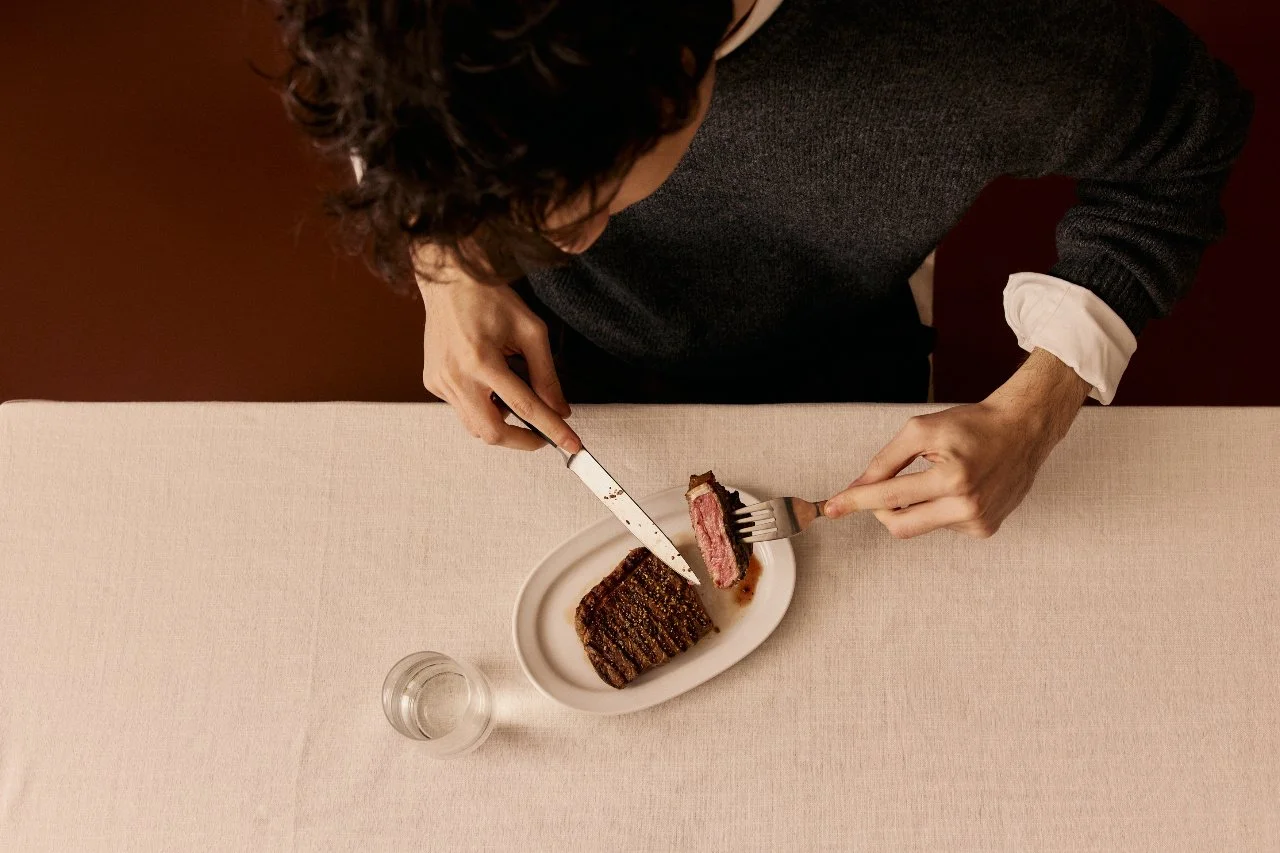
How much you need
You’ll see a lot of numbers online. Here are the ones that actually hold up.
The baseline: 0.8 grams per kilogram of body weight. This is the official RDA. It’s the minimum to avoid deficiency, not the amount that’s best for someone who trains.
If you train: 1.4 to 2.0 grams per kilogram of body weight. This is the range the International Society of Sports Nutrition recommends for active people.
Where the benefit levels off: around 1.6 grams per kilogram of body weight. A large meta-analysis found that muscle gains from resistance training tend to plateau around this point. Going higher isn’t harmful for healthy people. It just stops adding much.
Here’s the math for a 180-pound person who trains. Divide your weight in pounds by 2.2 to get kilograms, which is about 82. Multiply by 1.4 to 2.0. That’s roughly 115 to 165 grams of protein a day.
If you’d rather skip the conversion: 0.7 to 0.9 grams per pound covers most people who train.
Spread it out
When you eat protein matters almost as much as how much.
Your body builds muscle best when protein comes in steady doses across the day, not all at once. Aim for 25 to 40 grams per meal, across three or four meals. A 16-ounce steak at dinner after a day of toast and coffee is not the same as the same protein spread from morning to night.
This is how I structure my athletes’ days. Protein shows up at every meal, every time. Not because it’s trendy, but because the body uses it better that way.
Where to get it
You don’t need a powder aisle. You need a grocery list.
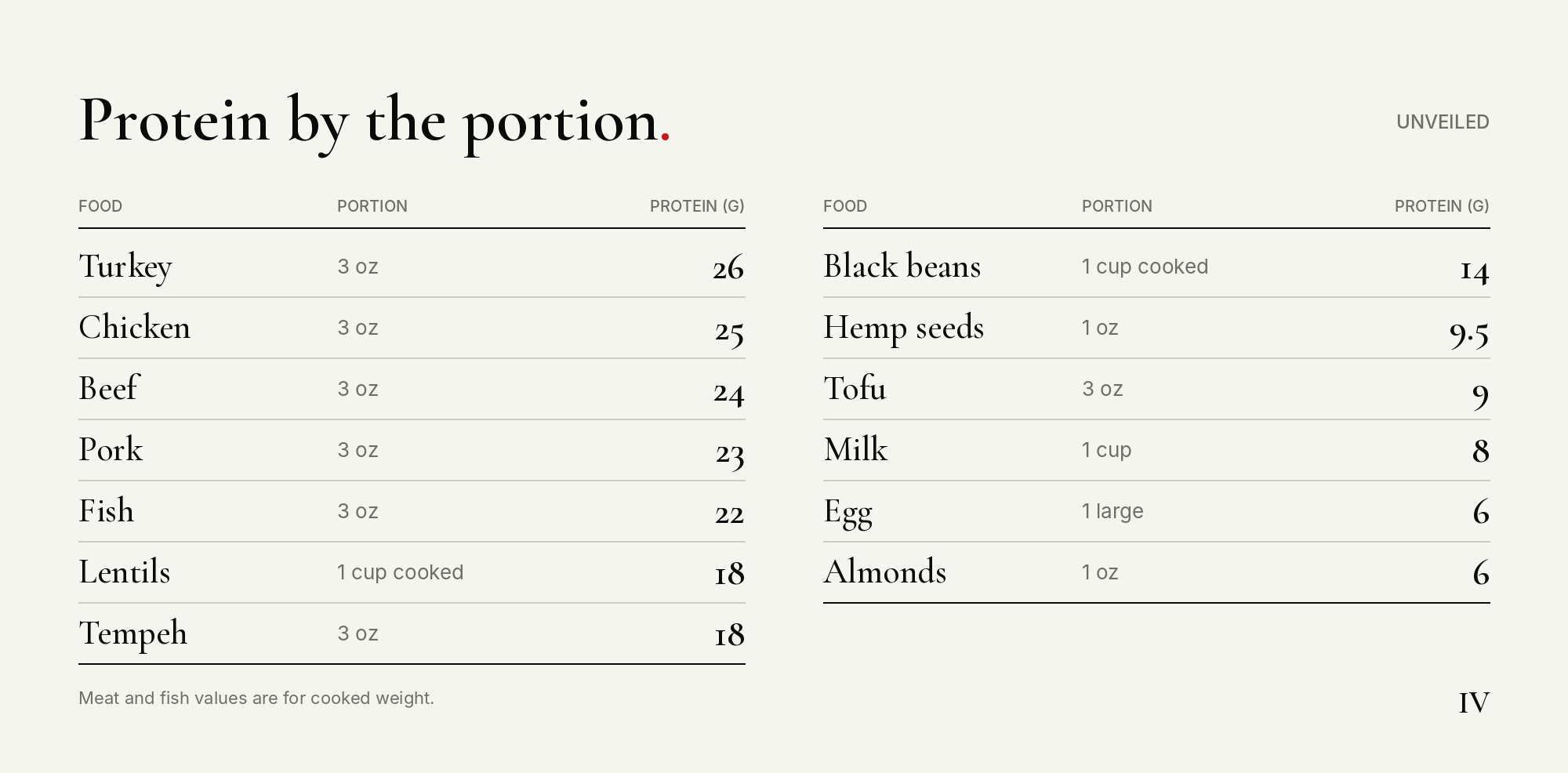
Plant-based? You can absolutely hit your number. It takes more volume and more variety, and the payoff is that beans, lentils, and tempeh bring fiber that meat never will.
Where powder fits
I use protein powder. Not every day. Only when I know I’m going to fall short, like on a long day or when I’m traveling. Whole food comes first. Powder should always be looked at as a convenience, not a foundational ingredient.
The same goes for creatine, one of the few supplements with decades of solid research behind it for strength and performance.
If you use either, buy products that are NSF Certified for Sport. That certification means the product has been independently tested for what’s on the label and for banned substances. For my athlete clients, it’s non-negotiable.
The mistake I see most
Here’s where I part ways with a lot of the fitness internet.
The biggest mistake I see isn’t too little protein. It’s people who prioritize protein and nothing else. They hit 180 grams a day on chicken breast, shakes, and protein bars, and their plate has no color, no fiber, and no plants.
Protein builds the muscle. What surrounds it decides how you feel, how you recover, and how your body handles the rest of the meal.
Fiber. Most adults eat far less than the 25 to 30 grams a day, which is linked to better health outcomes. Fiber keeps you full, feeds your gut, and slows how quickly carbs hit your bloodstream.
Whole foods. Vegetables, beans, whole grains, fruit. The less processed the plate, the more it does for you beyond the macros.
Blood sugar. In my practice, I build meals to keep the glycemic load in check: protein and fiber alongside complex carbs, not refined ones on their own. It’s why every dinner I cook for my athletes has a cruciferous vegetable and a complex carb next to the protein.
Protein is the anchor. It’s not the whole ship.
What the evidence says. What it doesn’t.
What it says:
Eating more than the RDA, roughly 1.4 to 2.0 g/kg, helps build and preserve muscle when paired with resistance training.
Protein is the most filling macronutrient.
Higher protein intakes are safe for healthy adults.
Higher fiber intake is consistently linked with lower risk of heart disease, type 2 diabetes, and early death.
Creatine is one of the best-supported supplements for strength and power.
What it doesn’t:
More protein isn’t endlessly better. The benefits level off quickly.
Protein without training builds very little muscle. The barbell does the asking and protein answers.
Research on glycemic index and athletic performance is mixed. I build low-glycemic meals because of what I see in practice and what the evidence suggests about blood sugar and satiety, not because it’s settled science.
If you have kidney disease or another medical condition, talk to your doctor before raising your protein intake.
On the plate
Here’s a day built from dishes I actually cook, landing around 150 grams of protein and 35 grams of fiber for an active adult. Numbers are approximate.
Breakfast: protein shake (about 35 g protein)
One scoop of protein powder, a cup of milk, a tablespoon of hemp seeds, frozen berries, and a handful of oats for fiber.
Lunch: white fish street tacos with corn mango salsa (about 35 g protein)
Five ounces of seared white fish on corn tortillas, topped with a bright salsa of charred corn, mango, red onion, lime, and cilantro.
Snack: Greek yogurt and almonds (about 25 g protein)
Three-quarters of a cup of plain Greek yogurt and an ounce of almonds.
Dinner: teriyaki chicken thighs, sautéed bok choy, roasted sweet potato, and edamame (about 55 g protein)
Six ounces of chicken thighs glazed in teriyaki, bok choy sautéed with garlic and ginger, roasted sweet potato, and half a cup of shelled edamame.
Swap it: sweet and sour shrimp with brown rice and stir-fried vegetables works in place of either the lunch or the dinner.
Every meal has protein. Every meal has fiber. Not one of them feels like a diet.
The bottom line
Know your number. Spread it across the day. Get it from real food first.
Then build the rest of the plate like it matters, because it does.
Protein isn’t a supplement. It’s dinner.
Follow the work at @ironveil_co, or reach out through the Contact page.
This post is for general education and is not medical advice. Talk to your healthcare provider before making significant changes to your diet or adding supplements.
References
Jäger R, et al. International Society of Sports Nutrition position stand: protein and exercise. J Int Soc Sports Nutr.2017;14:20.
Morton RW, et al. A systematic review, meta-analysis and meta-regression of the effect of protein supplementation on resistance training-induced gains in muscle mass and strength in healthy adults. Br J Sports Med.2018;52(6):376-384.
Schoenfeld BJ, Aragon AA. How much protein can the body use in a single meal for muscle-building? J Int Soc Sports Nutr. 2018;15:10.
Kreider RB, et al. International Society of Sports Nutrition position stand: safety and efficacy of creatine supplementation in exercise, sport, and medicine. J Int Soc Sports Nutr. 2017;14:18.
Reynolds A, et al. Carbohydrate quality and human health: a series of systematic reviews and meta-analyses. Lancet. 2019;393(10170):434-445.
Quagliani D, Felt-Gunderson P. Closing America’s fiber intake gap. Am J Lifestyle Med. 2017;11(1):80-85.